
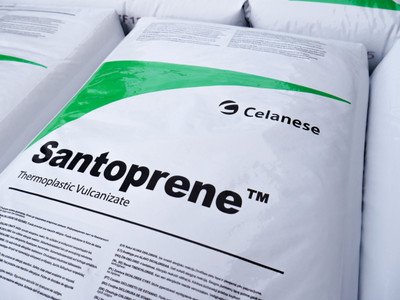
Understanding TPVs: Why Santoprene TPV (EPDM/PP) Became the Industry Standard
May 19th 2026
Thermoplastic vulcanizates, or TPVs, have been part of the extrusion world for decades. They were developed to offer the flexibility and resilience of rubber while providing the processing advantages of a thermoplastic. As manufacturers worked to shorten production cycles, improve consistency, and reduce material complexity, TPVs quickly became a practical alternative to traditional elastomers. Among these materials, Santoprene TPV (EPDM/PP) by Celanese has established itself as the most recognized and widely adopted TPV in the industry.
What is a TPV?
TPVs are created by combining crosslinked EPDM rubber with a polypropylene matrix. This structure allows the material to behave like rubber once formed, while still processing like a thermoplastic. Because there is no curing stage, TPVs run cleanly and predictably and maintain uniformity from one production batch to another. This consistency is a key reason they gained traction in sealing, gasketing, automotive, appliance, HVAC, marine, and general industrial applications.
Why Santoprene?
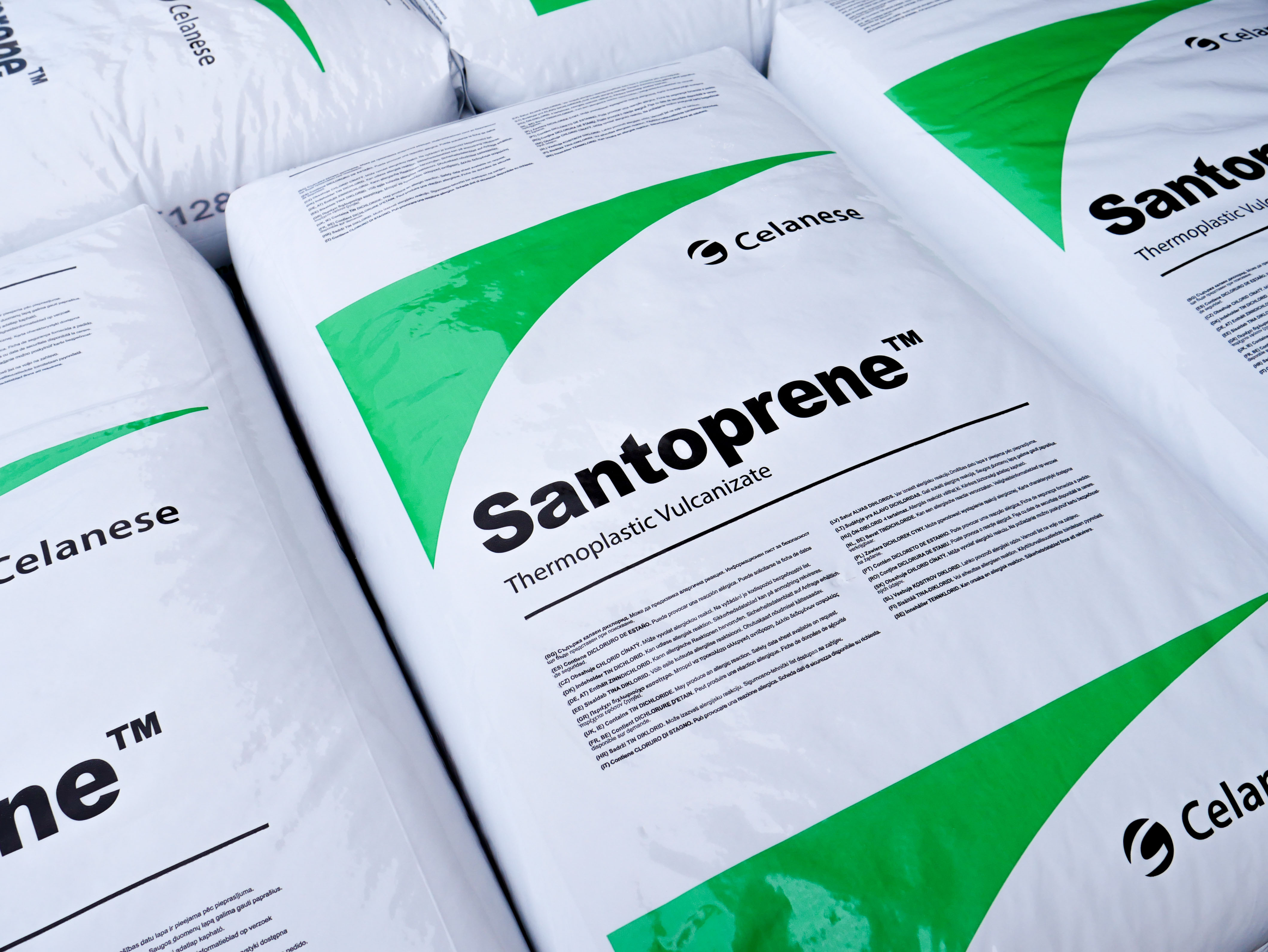
Santoprene TPV (EPDM/PP) became the industry benchmark because of its balance of properties. It maintains flexibility across a wide temperature range, offers dependable compression set performance, and resists UV, ozone, and many chemicals. These characteristics make it suitable for both indoor and outdoor uses where long-term stability matters. Its formulation also supports excellent dimensional consistency, which helps maintain fit and function in profiles, sheet, and die-cut parts.
Another reason Santoprene became a preferred TPV is the reliability of supply and formulation control. Originally developed and produced under ExxonMobil Chemical and now supported by Celanese Corporation, Santoprene has benefited from decades of investment, quality oversight, and consistent production standards. This has given manufacturers confidence that the material they specify today will be available and stable well into the future.
Simplifying the Manufacturing Process
In manufacturing environments, TPVs such as Santoprene can reduce manufacturing complexity. There is no need for curing ovens, cure temperatures, cure times, or the added space and labor that rubber processing requires. Santoprene is easy to use on standard thermoplastic equipment used by die cutters, which helps streamline production, shorten cycle times, and reduce energy use. For customers accustomed to the variability of mixed and cured rubber, the predictable behavior of Santoprene offers clear advantages.
Sherwood Industries has extensive experience extruding Santoprene for both profile and sheet applications. Because we manage tooling, extrusion, and quality processes in-house, we are able to take full advantage of the material’s consistency to produce parts that meet tight dimensional and performance requirements. Our ISO-certified systems support the quality expectations of industries that rely on TPVs, and our background in elastomer alternatives allows us to guide customers in selecting the right Santoprene grade for their application.
Santoprene TPV (EPDM/PP) became the industry standard TPV because it delivers the qualities that manufacturers need: consistent performance, clean processing, reliable supply, and long-term stability. As extruders, we see firsthand how these advantages translate into dependable finished parts. Sherwood Industries is available to help customers understand TPV options and determine whether Santoprene is the right choice for their sealing or extrusion needs.